About CSSM
Description of mission / research objectives / organizational goals.
3 Pillars -> Information on CSSM's ability to develop solutions in food security, climate change and clean water.
Description of mission / research objectives / organizational goals.
3 Pillars -> Information on CSSM's ability to develop solutions in food security, climate change and clean water.
The ForestSHARE program is well underway. The goal of this project is to help woodlot owners better understand their forest soils by developing baseline ranges for different soil properties and providing management interpretations for various forest types across the province.
Soil sample collection is currently underway, although progress has been slower than expected due to the forest fire ban and some hesitancy from landowners. We want to emphasize that this project is not related to prospecting, mining, or resource extraction of any kind. All information collected is confidential, and individual landowner information is not shared publicly.
In the previous magazine editions, we explained the goals of the project and how the sampling sites were selected. In this edition, we want to highlight how the samples are collected and what they are being used for.
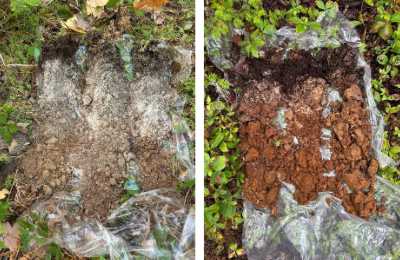
At each site, we collect about four cups of soil using a soil auger. Typically, 3–4 augers are taken from different spots to ensure the sample is representative of the site. Each auger is compared to the others to make sure that they are similar in texture and colour. We collect the soils into bags and freeze the samples as soon as possible.
At each site, we collect soil from two layers. The first is the forest floor (about 0–15 cm deep), which is mostly organic material. The second is the mineral soil (about 10–25 cm deep), made up of sand, silt, and clay. In some locations, the forest floor layer is absent, so we sample only from two different mineral layers.
Once the samples are collected, they are delivered to two labs:
Soil health can differ depending on the forest type, soil type, and management goals. Therefore, it is important to measure a suite of soil properties. Here are some (not all) of the soil properties we are analyzing:
Some of the questions we are hoping to answer through this data include:
As the ForestSHARE project moves forward, each sample helps us better understand Nova Scotia’s forest soils. This knowledge will be turned into practical guidance that woodlot owners can use to make informed decisions about managing their land. Whether it’s choosing tree species that are well-suited to the soil, improving growth and resilience, or protecting long-term forest health, the results of this project aim to support landowners directly.
This project is a partnership between Murray A. Reeves Forestry, the Family Forest Network, Dalhousie University, the Department of Natural Resources, Nova Scotia Community College, and Genome Atlantic.
For more information, please reach out to:
Caitlin McCavour: caitlin.mccavour@dal.ca
Kevin Keys: kevinkeys.ffn@gmail.com
Debbie Reeves: debbie.reevesforestry@gmail.com